
My Kid Just Grabbed That Hot Cup of Tea. Here's Exactly What to Do.
⚠️ Medical Disclaimer: This guide provides educational information only. It does not replace professional medical advice. In any emergency, call 999 immediately. For medical concerns about your child, always consult your GP or healthcare provider. In a life-threatening emergency, always call 999. Guidance is based on current NHS and RCUK guidelines.
By Johnee (Jo) Whalen HCPC Critical Care Paramedic, NHS Resuscitation Practitioner, RCUK Life Support Instructor
Medically Reviewed: 03/03/2026
Last Updated: 03/03/2026
Next Review: 03/2027
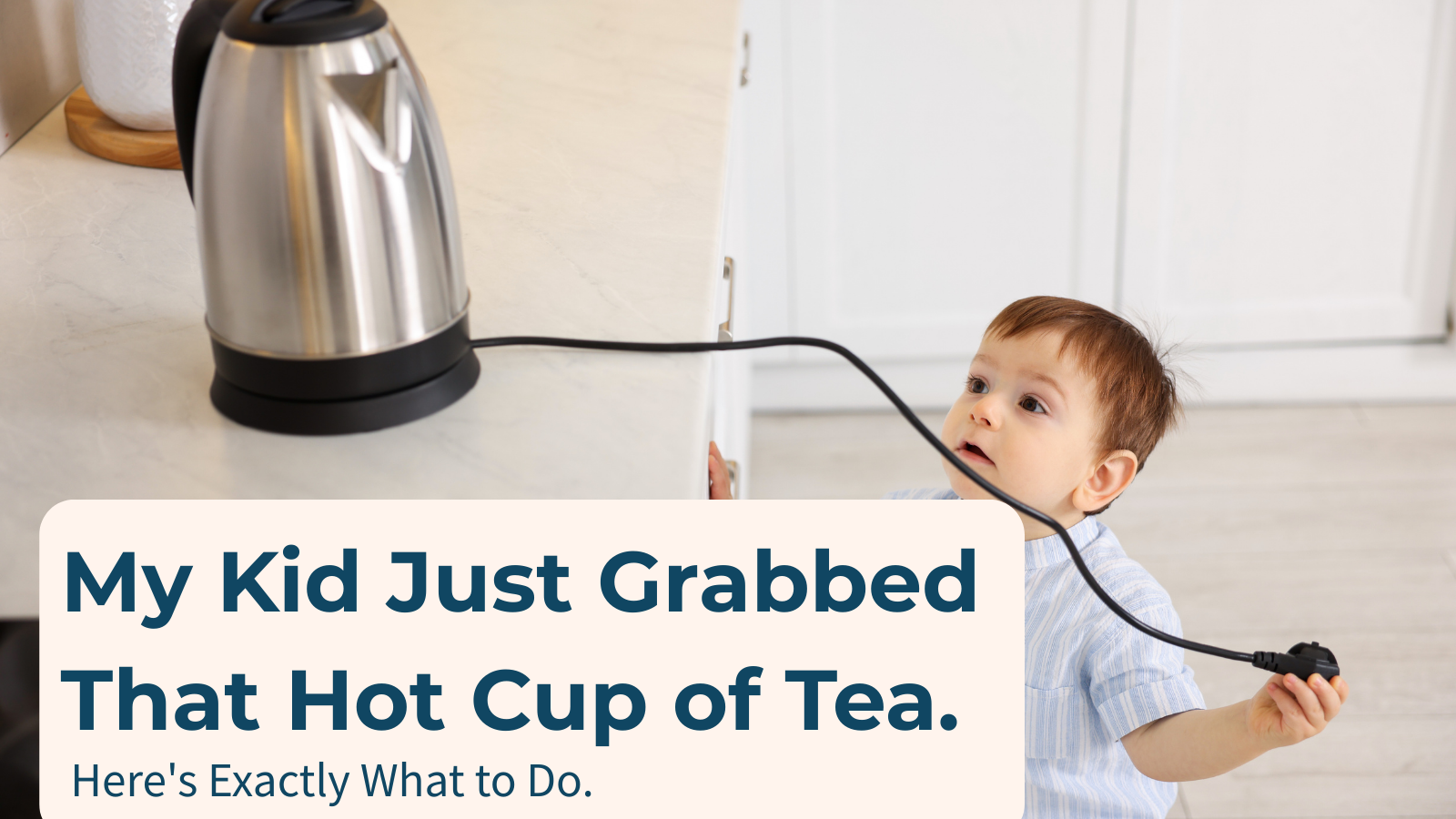
Right, I'll put my hand up.
I've done it myself. Boiled the kettle, made a cup of tea, and then — chaos. The kids start kicking off in the other room, or the dog's lost the plot, and off I go to sort it out. That cup of tea? Sitting dangerously close to the edge of the counter. Right within reach of small, curious, very fast little hands.
Every time I come back to find it untouched, I quietly thank my lucky stars.
But here's the thing — what if they did grab it?
Burns and scalds from hot drinks are the single biggest cause of burn injuries in babies and toddlers in the UK. It happens in a split second. And when it does, the next few minutes matter enormously.
I'm Jo — a Critical Care Paramedic with 13 years of paediatric emergency experience, a mum of two, and the founder of Project CPR. In this post, I'm going to walk you through exactly what to do if your child gets burned or scalded, what NOT to do (because there are some very common mistakes that make things significantly worse), and how to know when you need to head straight to A&E.
No jargon. No panic. Just the stuff that actually matters.
What's the Difference Between a Burn and a Scald?
Quick bit of clarity here, because the words get used interchangeably and they're not quite the same thing.
A burn is caused by dry heat — fire, a hot iron, touching the oven, that sort of thing. A scald is caused by wet heat — boiling water, steam, a hot cup of tea, soup spilling off the hob.
The good news? You treat them both exactly the same way. So if you take nothing else from this post, remember that.
Why Burns Are So Serious in Babies and Young Children
Here are the numbers that should stop us all in our tracks:
Over 100 children are admitted to A&E with burns every single week in the UK.
Children under five account for 50–80% of all childhood burn injuries.
Hot drinks — including tea and coffee — are the number one cause of scalds in infants and toddlers.
(Sources: British Red Cross, NHS England, Clinical Procedural Document on Burns & Scalds)
Here's the thing a lot of parents don't realise: a baby or toddler's skin is significantly thinner and more sensitive than adult skin. That means the same hot drink that would give you a nasty but manageable burn can cause a deep, serious injury to your little one. Fast.
And the amount of pain doesn't always reflect the seriousness of the burn, either. A severe burn can actually feel less painful than a superficial one — because in deep burns, nerve endings are damaged. So don't let a quiet child fool you into thinking it's not that bad.
This is why acting fast, and acting correctly, is everything.
What to Do If Your Child Gets Burned or Scalded — Step by Step
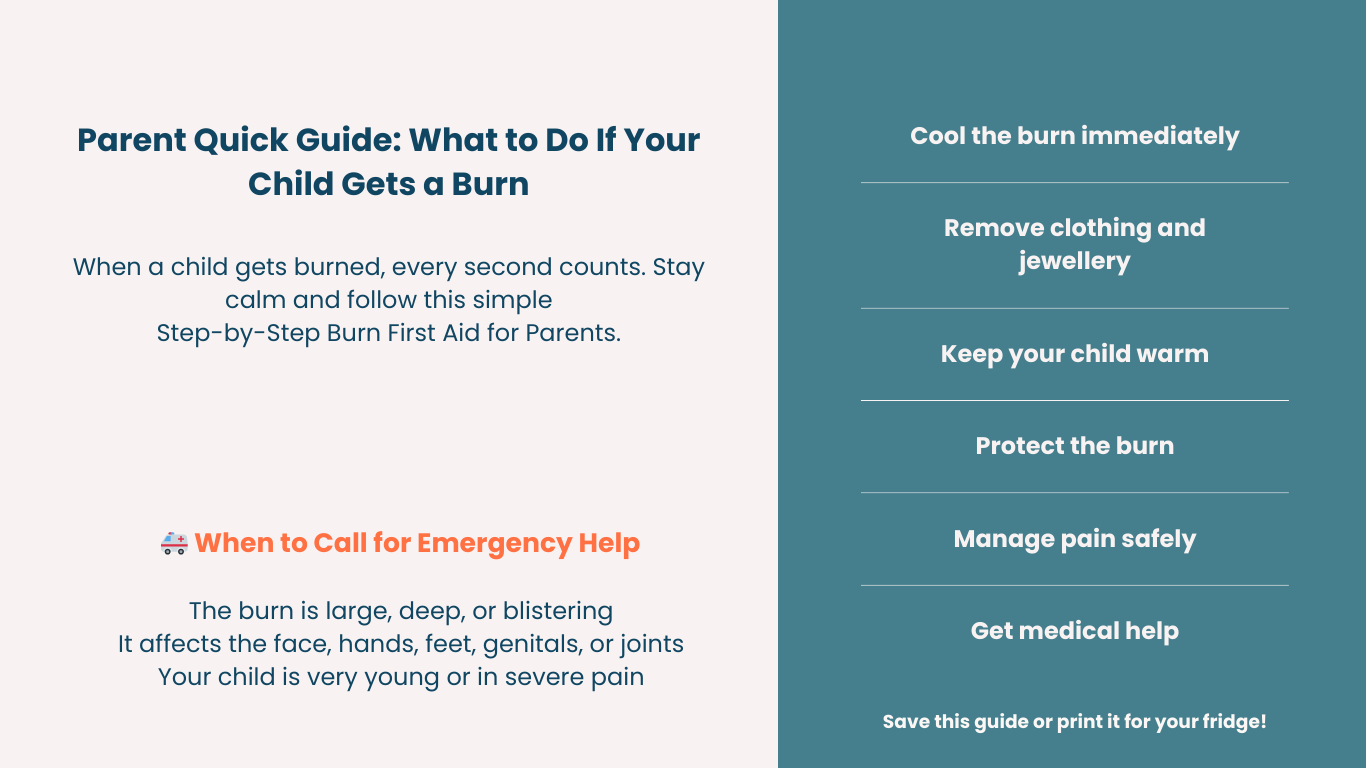
Here is the sequence. Commit this to memory. Stick it on your fridge if you have to.
Step 1: Get Them Away from the Heat Source
First things first — remove them from danger. If it's a spilled drink, get them away from where it's pooling. If they've touched something hot, get them away from it. Don't put yourself at risk in the process.
Step 2: Cool the Burn Under Running Water for 20 Minutes
20 minutes. Not 5. Not 10. Twenty minutes of cool or lukewarm running water.
There is also a 3-hour window here that most people don't know about — even if it's been some time since the burn happened, cooling the burn with running water can still significantly reduce scarring and damage. So don't give up on this step if it wasn't done immediately.
The water should be cool or lukewarm — not icy cold. Cold shock on a small child's body can cause hypothermia (yes, really — more on that below).
I know 20 minutes feels like forever when your child is crying and you're panicking. But this step is genuinely the most important thing you can do. It reduces pain, swelling, and the risk of long-term scarring. As the British Red Cross puts it: the sooner and longer a burn is cooled with running water, the less the impact of the injury.
You can call 999 while you're doing this if you think it's serious. You don't have to choose between the two.
Step 3: Remove Clothing and Jewellery
Take off anything near the burned area — clothing, nappies, rings, bracelets. Do this carefully and gently while the water is still running if you can.
One important thing: if anything is stuck to the skin, leave it. Do not pull it off. Pulling stuck fabric or jewellery from a burn causes serious further damage. Let the medical team handle that.
Also worth knowing — if your child has been scalded by a hot drink, the liquid runs down and soaks into clothing. Get nappies, socks, and shoes off too, because hot liquid can pool in them and keep burning even after you think the initial scald is over.
Step 4: Keep Them Warm
This sounds counterintuitive when you're actively cooling a burn, but it's critical. Put a blanket or warm layers over the rest of their body — just not on the burned area itself.
Young children are particularly vulnerable to hypothermia when cooling large burned areas. Their little bodies lose heat quickly. Warm the child. Cool the burn.
Step 5: Cover with Cling Film
Once you've cooled the burn for the full 20 minutes, cover it loosely with cling film. Lay it over the burn lengthways — don't wrap it tightly around a limb.
If you don't have cling film, a clean plastic bag works too (especially good for hand burns). The goal is to keep the area clean, reduce pain by keeping air off the skin, and allow medical professionals to see the burn through the covering without removing it.
Don't use fluffy materials like cotton wool, towels, or plasters — these can stick to the burn and cause further damage when removed.
Step 6: Manage the Pain
Burns are painful. Even after cooling, they will hurt.
You can give paracetamol or ibuprofen to help manage pain — follow the dosing instructions for your child's age and weight. Children under 16 should not be given aspirin.
The Quick-Reference Version — Screenshot This
What You Must NEVER Do
This is the section I really need you to read. Because these myths are everywhere — passed down by well-meaning relatives and outdated advice. And they cause real harm.
NEVER apply any of the following to a burn:
✗ Butter or oils Oils retain heat. They trap it in the skin and make the injury worse. I know your nan swore by it. She was wrong. Lovingly, but wrong. The British Red Cross is clear: butter and cream contain oils, and oils do the opposite of what you're trying to achieve.
✗ Toothpaste Toothpaste often contains menthol, which gives a false sensation of cooling but does not actually cool the burn. It also needs to be cleaned off before medical treatment can begin — which is painful and delays proper care.
✗ Ice or iced water Ice causes cold damage to already injured skin and can cause hypothermia in young children. It also restricts blood flow to tissue that needs it. Cool or lukewarm water only.
✗ Creams, lotions or moisturisers Even seemingly harmless creams can trap heat and interfere with medical assessment. Save them for after the burn has properly healed.
✗ Fluffy or adhesive dressings Cotton wool, towels, plasters — anything that can stick to the wound or leave fibres behind will cause more damage when removed. Cling film only.
Free Download: The Choking Rescue Blueprint
Get our printable parent first aid guide — designed to be on your fridge before you need it.
When to Call 999 or Go Straight to A&E
Here's what to memorise. In the moment, you won't be Googling this.
Call 999 immediately if:
The burn is large — bigger than the palm of your child's hand
The burn is deep — causing white, waxy, or charred skin
The burn is on the face, neck, hands, feet, joints, or genitals
Your child has inhaled smoke or fumes
There are signs of shock: pale/grey skin, rapid breathing, drowsiness, unresponsiveness
It's an electrical burn — even if it looks minor
It's a chemical burn
Go to A&E or call 111 if:
Any burn on a baby or young child — always seek assessment
Any burn bigger than a 50p coin
The burn is blistering, weeping, or appears infected
You are unsure about the severity at all
First aid was delayed
You may be able to manage at home if:
The burn is superficial and smaller than a 50p coin in an adult
There is no blistering or broken skin
Skin is pink and painful (not white or charred)
Note: For any child, always seek medical advice first
A note from me, parent to parent: when in doubt, go. Burns can look deceptively minor in the early stages and become significantly worse over the following hours. There is no shame in turning up to A&E and being told it's fine. That is the best possible outcome.
What About Blisters?
Blisters are the body's way of protecting damaged skin underneath. They're a good sign in one sense — they mean the skin is doing its job.
Do not pop them. I know they look tempting. They're not. Bursting a blister removes the protective barrier and significantly increases the risk of infection. If a blister bursts on its own, keep the area clean and covered with a non-adhesive dressing, and seek medical advice.
Prevention: The Stuff Worth Knowing Before It Happens
I hate that this section even needs to exist — because burns accidents happen to brilliant, vigilant, loving parents every single day. They're not the result of negligence. They're the result of one second of distraction and a very fast toddler.
But there are a few things worth building into your habits:
Move hot drinks to the back of the counter or table the moment you make them — especially if you have a mobile baby or a toddler.
Never hold a hot drink while holding your baby. Not even for a second.
Test bath water with your elbow before putting your baby in — wrists aren't sensitive enough.
Turn saucepan handles to the back of the hob so they can't be grabbed.
Keep children out of the kitchen when you're cooking where possible.
Fit a kettle guard if you have a curious toddler.
Free Download
If you want to go deeper on this, our Miss Nothing Baby Proofing Checklist covers room-by-room hazards including kitchen and bathroom burn risks. It's free and thorough.
Here's What I Want You to Take Away
Burns are scary. But your response in the first few minutes can make an enormous difference to the outcome — reducing pain, reducing scarring, and reducing the severity of injury.
You don't need to be a paramedic to do this right. You just need to know the steps.
Cool. Remove. Warm. Cover. Seek help.
And never, ever reach for the butter.
That's it. That's the whole thing. You've got this.
Frequently Asked Questions
How long should I cool a burn for? Cool the burn under cool or lukewarm running water for a minimum of 20 minutes — starting as soon as possible after the injury. Even if some time has passed, there is a 3-hour window in which cooling can still reduce scarring and damage. Don't give up on this step if it wasn't done immediately.
Can I put butter, cream or toothpaste on a burn? No — and this is really important. Butter and oils trap heat in the skin, making the injury worse. Toothpaste gives a false sensation of cooling without actually helping. Both need to be cleaned off before treatment can begin, causing additional pain and delay. The British Red Cross and NHS both advise firmly against all of these. Use cool running water only.
Should I go to A&E for every burn in a child? For babies and young children, yes — always seek medical advice. Even burns that appear minor can be more serious than they look, and children's skin is significantly more vulnerable than adult skin. If you are in any doubt at all, go to A&E or call 111.
What if clothing is stuck to the burn? Do not try to remove it. Pulling material stuck to burned skin causes serious additional damage. Cool the burn with water running over the clothing, and let medical professionals remove it safely.
My child has a blister — should I pop it? No. Blisters protect the damaged skin underneath. Popping them dramatically increases the risk of infection. Leave them intact. If one bursts on its own, keep the area clean and covered with a non-adhesive dressing.
Can I use ice to cool a burn? No. Ice causes cold injury to already damaged skin and restricts blood flow. It also carries a real risk of hypothermia in young children. Use cool or lukewarm running water only.
Written by Jo Jo is a Critical Care Paramedic (Registered HCPC), NHS Resuscitation Practitioner, and RCUK Life Support Instructor with 13 years of paediatric emergency experience. She is a mum of two young children and the founder of Project CPR — a UK first aid training business created to help parents go from worried to ready. Jo founded Project CPR after using her clinical training to save her newborn daughter from choking.
Last reviewed: 2026 | Next review due: 2027 | Based on current NHS and RCUK guidelines.
Sources: NHS (nhs.uk/conditions/burns-and-scalds) · British Red Cross (redcross.org.uk/first-aid/learn-first-aid-for-babies-and-children/burns) · St John Ambulance (sja.org.uk/first-aid-advice/burns-and-scalds) · NHS Inform (nhsinform.scot) · Child Accident Prevention Trust (capt.org.uk/first-aid-for-burns-and-scalds) · University of California